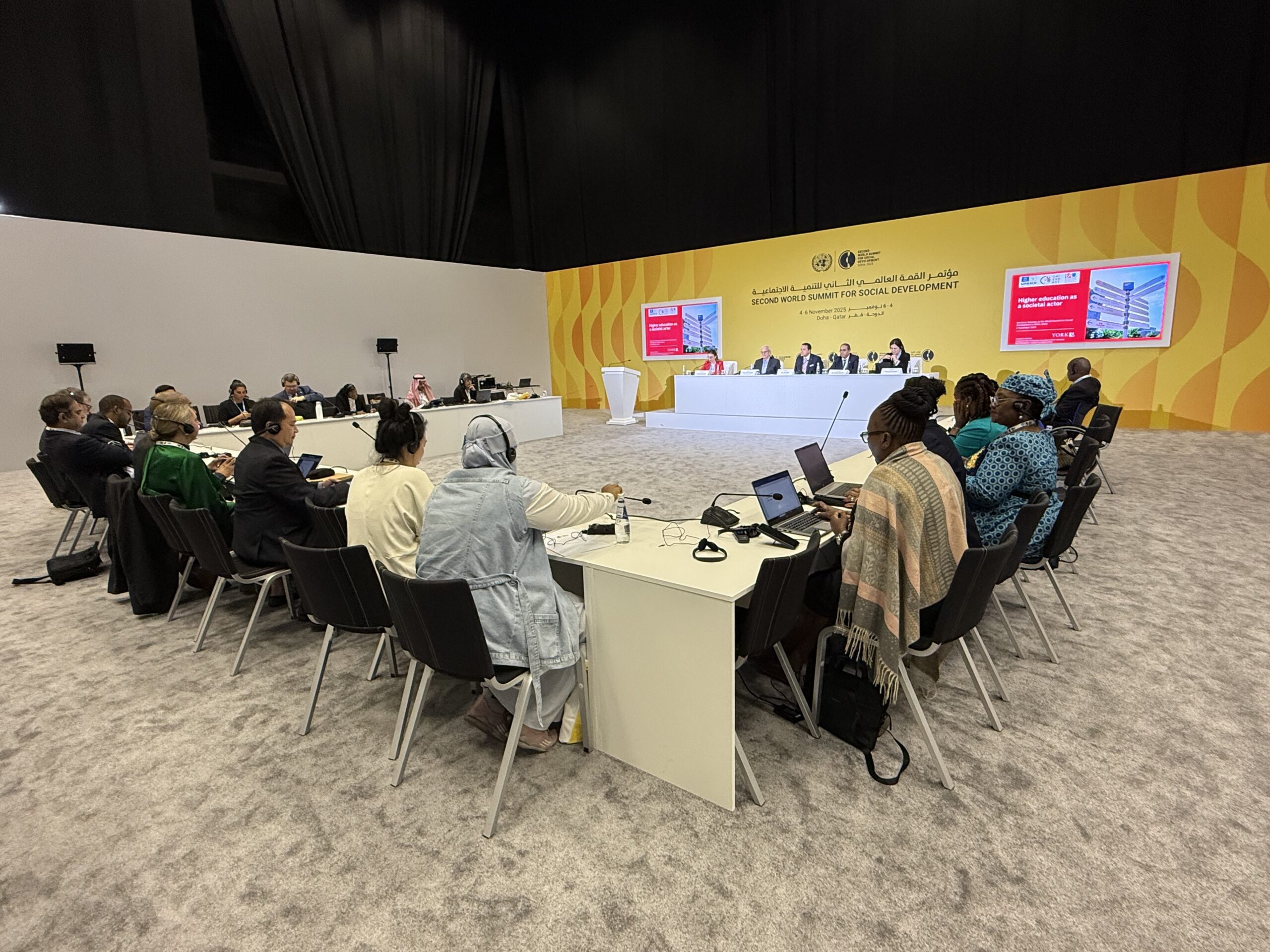
The WSSD2 People’s Report assesses Canada’s 30-year record implementing commitments made at the first World Summit for Social Development (WSSD1) in Copenhagen (1995) through the Second World Summit for Social Development (WSSD2) in Doha (2025), focusing on SDG 1 (No Poverty), SDG 2 (Zero Hunger), and SDG 5 (Gender Equality). Developed collaboratively by over 30 civil society organizations—including grassroots groups, Indigenous organizations, feminist, disability-led, Black-led, and Queer/2SLGBTQIA+ led organizations, academics, and faith communities—this report holds the Government of Canada accountable for its human rights and sustainable development obligations while proposing evidence-based solutions to close persistent gaps.
Despite measurable gains in some areas, Canada’s progress remains constrained by structural drivers: income and wealth inequality, underinvestment in non-market housing, fragmented social protection, over-reliance on charitable food systems, and market-first policy approaches that fail to address root causes of poverty, hunger, and gender inequality. Climate change acts as a risk multiplier, deepening these inequities and disproportionately impacting Indigenous peoples, Black communities, racialized groups, disabled people, 2SLGBTQ+ individuals, women, and youth. Critically, on November 4, 2025—the opening day of WSSD2—Canada presented a federal budget imposing 15% across-the-board program cuts, reducing civil service capacity, increasing military spending, and investing in fossil fuel projects, directly contradicting the Doha Declaration’s call to strengthen social protection and address structural inequality.
Using intersectional, rights-based, feminist, anti-oppressive, and anti-colonial frameworks, this report synthesizes publicly available government data, civil society research, academic literature, and community-generated knowledge to demonstrate that poverty and hunger are policy choices, not inevitable outcomes. When income supports are adequate and accessible, poverty and food insecurity fall rapidly. When non-market housing is funded at scale, homelessness declines. When Indigenous peoples and equity-seeking communities lead solutions, gaps close faster. Yet these evidence-based approaches remain partial, underfunded, and vulnerable to reversal.
The report provides concrete, actionable recommendations: establishing a rights-based pathway to basic income adequacy; scaling up non-market housing with legislated targets; enacting a Right to Food and Food Sovereignty Act; fully implementing the MMIWG Calls for Justice and National Action Plan to End Gender-Based Violence; embedding gender-responsive budgeting and intersectional analysis across all economic, climate, and infrastructure decisions; and building robust accountability mechanisms including a Federal Human Rights Office and independent SDG oversight. These solutions require that budgets, trade agreements, and industrial strategies be tested against human rights obligations rather than economic potential alone, and that civil society, Indigenous governments, and communities with lived experience have meaningful power in policy design and monitoring. As the current SDG framework expires in 2030, Canada has an opportunity to demonstrate leadership by aligning domestic action with international commitments, treating economic, social, and cultural rights as enforceable rather than aspirational, and showing that a wealthy, diverse nation can build resilience, stability, and shared prosperity through rights-based frameworks. This report serves as input to Canada’s 2026 Voluntary National Review and the formulation of the post-2030 SDG agenda, asserting that credibility at global tables depends on domestic progress—we cannot champion human rights internationally while undermining them at home.